
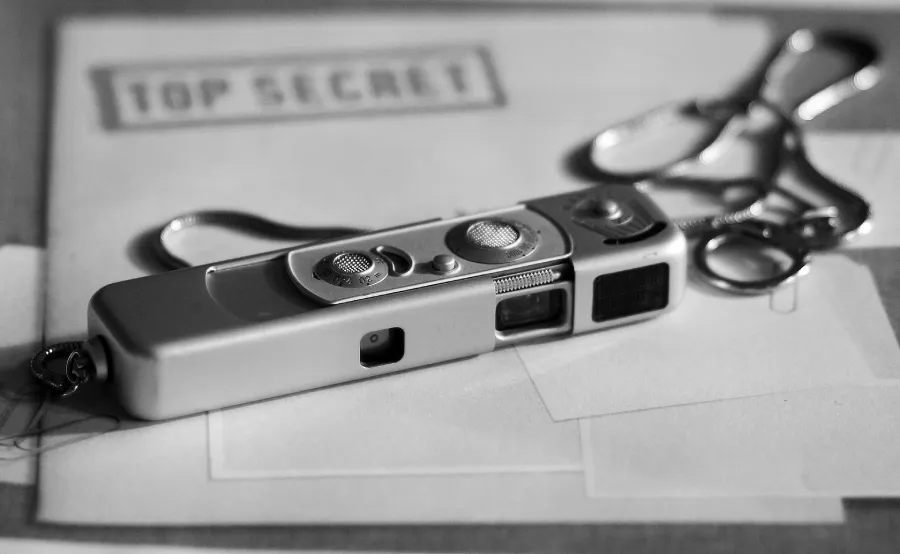
Ever since Rudyard Kiping’s Kim and Joseph Conrad’s The Secret Agent we’ve enjoyed the shadowy world of spies, ciphers, surveillance, danger and double-dealing in fiction. But whether the story is hi-tech, Cold War, or any other variant, all good spy novels have a few things in common.
- They’re character‑driven.
- The locations are intrinsic to the plot.
- Things are rarely as they first appear.
- They tell us something about the human condition.
So much for the elements, what elevates a spy novel?
Characters we want to follow into the shadows
A great spy story must have well-rounded, believable characters, not merely caricatures. British spy novels tend to be inhabited by flawed, conflicted and understated individuals rather than all-action heroes. (Okay, James Bond is an exception – I’ll give you that!)
We love:
- Complex protagonists beset by human frailties, who manage their own issues alongside the challenges of the job.
- Moral dilemmas and personal consequences, because nothing in the world of espionage is ever black and white.
- Memorable supporting characters, be they informants, bosses, allies or adversaries – each adding texture and tension.
You may be thinking of George Smiley, the taciturn hero of John le Carré’s Tinker Tailor Soldier Spy and eight other le Carré novels. He epitomises a very British stoicism (although I’d argue that Gerd Wiesler in The Lives of Others also fits the mould) – a quiet intelligence and emotional depth that bring him to life on the page.
Settings that we feel we know (even if we don’t)
Wherever they are set – London, Paris, Berlin, or beyond – we get an initmate sense of the location and its importance to the novel. When it’s well-written, the setting is an integral part of the story and a character all of its own:
- City backstreets, anonymous office blocks, and surveillance look-out points.
- Department buildings riven with power struggles and hidden agendas.
- Remote countryside hideaways where dangers lurk in the undergrowth.
Plots that hold our attention and test us
A good espionage plot gives us clues and keeps us guessing. And every time we think the picture is finally coming into focus there’ll be one more extra piece that needs to be considered.
We enjoy:
- Layered conspiracies that unfold gradually, taking us deeper into the narrative each time.
- Realisations that feel earned, not accidental or telegraphed to soon. We like to solve the puzzle.
- A sense of realism, where spycraft is about observation and consequence, just as much as assassins and explosions.
Dialogue that crackles
Authentic speech (including internal dialogue) that:
- Reveals character without spelling things out.
- Builds tension through what’s said, how it’s said and what’s not said.
- Can be wry, economical and clever. Sometimes the air is a little blue.
Is it time for a different kind of British spy?
If you’re eager to explore gritty and morally ambiguous British spy novels, come and meet Thomas Bladen. He’s smart, sardonic and rough around the edges. Perfect for the UK’s Surveillance Support Unit, working at the arse-end of British Intelligence. There’s a whole world of secrets waiting for you.
Leave a Reply